
Crafting user delight & engagement by adding a new way to find prospective roommates.
Project Context
Transforming the roommate search from a gamble into a science
According to the study, Non-family Living Arrangements Amount Young Adults in the United States, "individuals living with roommates (i.e., non-family members/non-spouses) has become increasingly common as it peaked during traditional university, however more young adults (ages 25-29) continue to live with roommates later into adulthood (Jeffers et al., 2024).
With the ongoing socioeconomic shifts and living with roommates as an economic driver, I wanted to replace the stressful high-stakes gamble of random roommates for a structured, data-driven match that gives confidence in the roommate search.
The Challenge
Finding a place to live in Southern California is difficult…
especially finding the right person to live with. Current mobile applications prioritize property listings over human connection, leaving users to filter through endless profiles without a clear sense of interpersonal compatibility on their own.
Introduction
Roomster, the roommate app
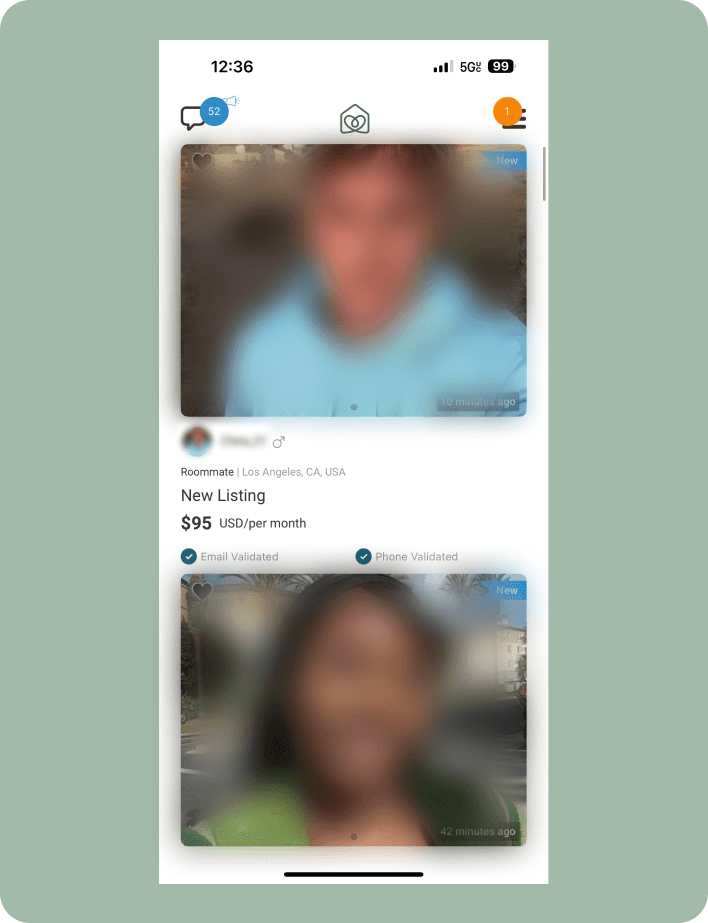
Roomster is an existing mobile application that allows users to browse a list of potential roommates in their desired area.
While the platform does successfully bring roommate seekers together, it relies entirely on manual browsing leaving users to filter through profiles on their own without a structure.
User Research
What Do Roommate Seekers Value the Most?
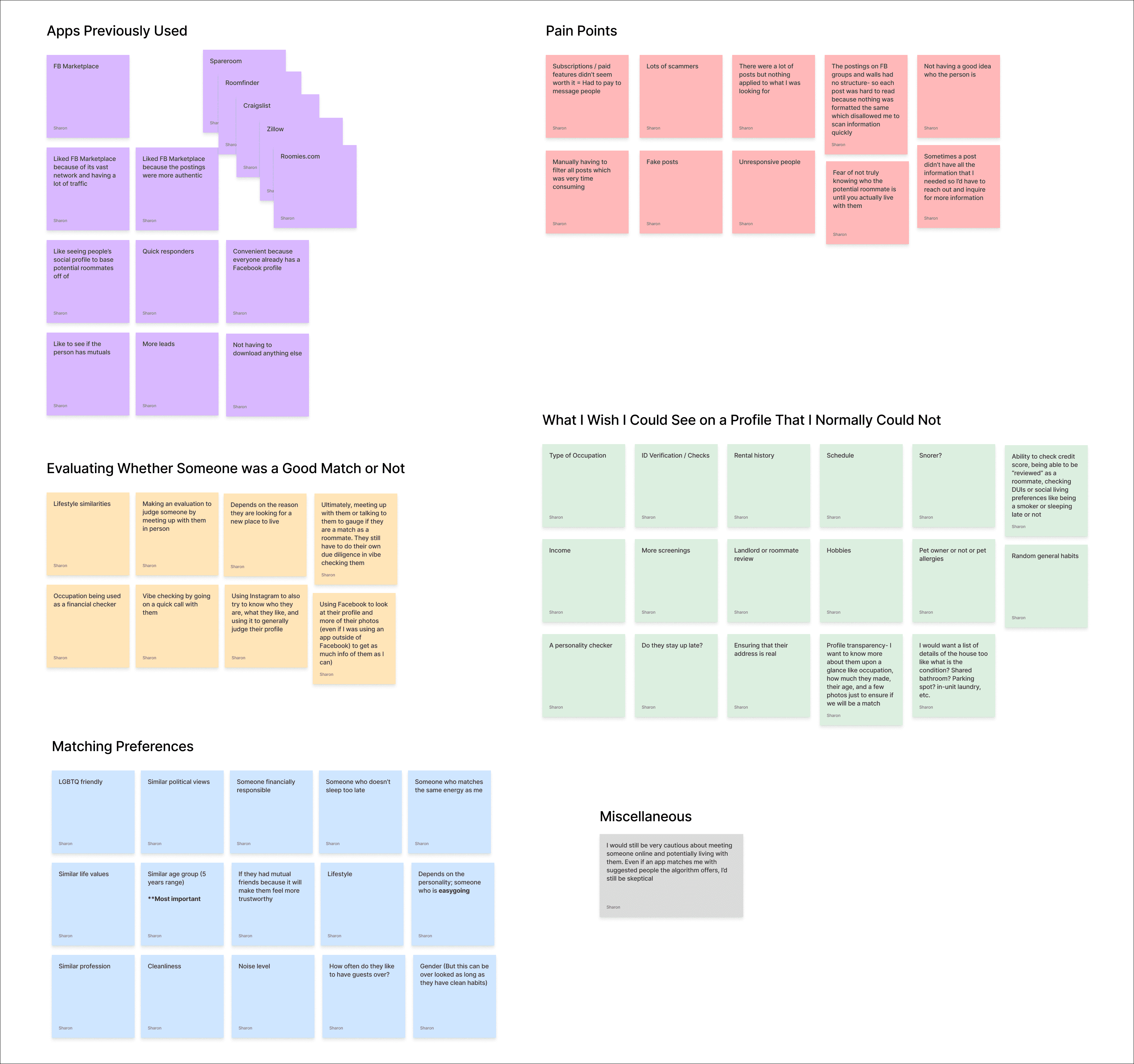
I conducted 7 user interviews with a group of participants who were roommate seekers and property owners, looking to share a home. My goal was to uncover their pain points and explore how they navigated the housing market and evaluated potential roommates.
Overall, I identified the universal desire for compatibility in lifestyle habits, financial reliability, and social compatibility.
User Interview Insights
Facebook Marketplace was the most used tool, specifically because it provides a human element. Users felt more comfortable interacting with others on Facebook because they can view their profile. Having a user profile was important to 100% of participants in the user interview, because it allowed them to perform their own way of verifying that those people were real rather than scammers.
Financial compatibility was the top concern throughout the user interviews.
Biases
While conducting the user surveys, it is good to note that there was a selection bias as I have only interviewed people within a single region: SoCal. Most of the participants were in a similar demographic as they were younger and living in high-cost areas like Southern California. During the interview, I asked participants to recall their moments and experiences when looking for roommates which were around 1-3 years ago on average.
In addition to social biases, by including questions regarding finances to evaluate compatibility, the design may favor users with stable or traditional income streams. Asking for financial details can create a sense of “threat” to users as there is a baseline assumption that everyone is comfortable being transparent about money.
When asking participants to describe a time when using a roommate finder platform, there could be a recall bias as the human memory is not perfect. Users tend to remember only the most extreme frustrations (scams and ghosting) and forget the small details.
User Research
What Do Roommate Seekers Value the Most?
I conducted 7 user interviews with a group of participants who were roommate seekers and property owners, looking to share a home. My goal was to uncover their pain points and explore how they navigated the housing market and evaluated potential roommates.
Overall, I identified the universal desire for compatibility in lifestyle habits, financial reliability, and social compatibility.
User Persona
Meet the Roommate Seeker!
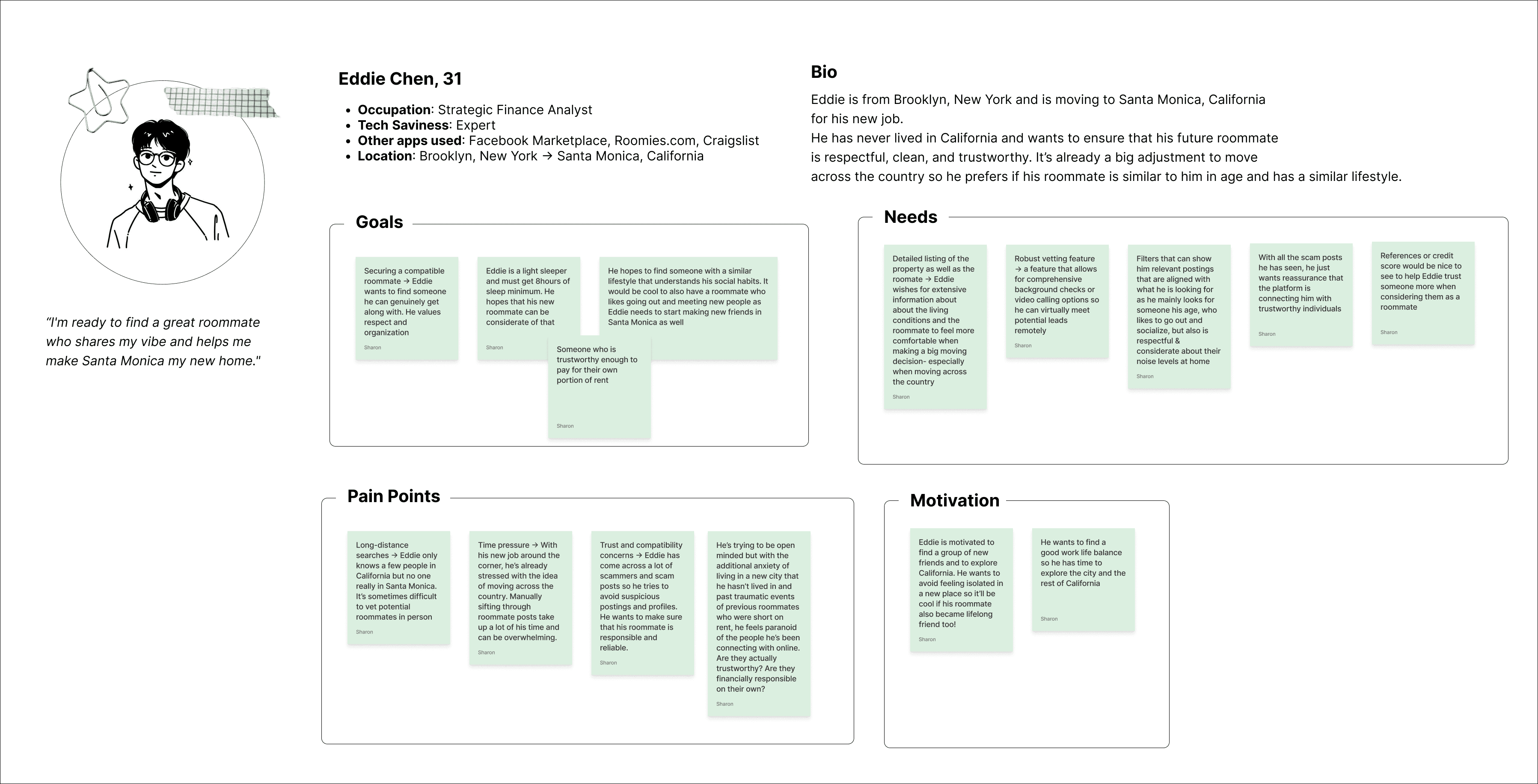
Everyone wants a “good” roommate, however, the user interviews revealed that their motivations and deal-breakers varied based on their current life stage. I identified the main archetype to represent the primary users of the Roomster Compatibility feature: The Lifestyle-Driven Connector.
Problem Statement
💭
Roomster forced users to manually sift through a list of profiles without guidance leading to wasted time and increased stress during users' roommate search.
💭
I designed a Compatibility Matching Feature integrated into the Roomster mobile app, a platform for finding roommates and available rooms, with the following goals in mind:
This feature leverages data-driven approach to pair users based on 3 core pillars:
Personality
Cleanliness
Responsibility
Feature Prioritization
With a clear understanding of user pain points, I moved to the ideation phase. The user interviews highlighted the following:
Lifestyle Tags
(High Impact / Low Effort)
User interviews showed that "deal-breakers" are often small things like snoring or frequency of guests. Forcing users to select these during onboarding creates a "structured bulletin board" that users specifically asked for to replace the chaos of Facebook/Craigslist.
Verification Systems
(High Impact / High Effort)
Almost every participant mentioned "scams" and "trust." While complex to build, identity and salary verification (even just a "Verified" badge) would set Roomster apart as the "safe" alternative to free platforms.
This is the core of your case study. Instead of just searching, users want the app to do the heavy lifting of filtering by compatibility (Social battery, Cleanliness, Responsibility).
Laying the Foundation
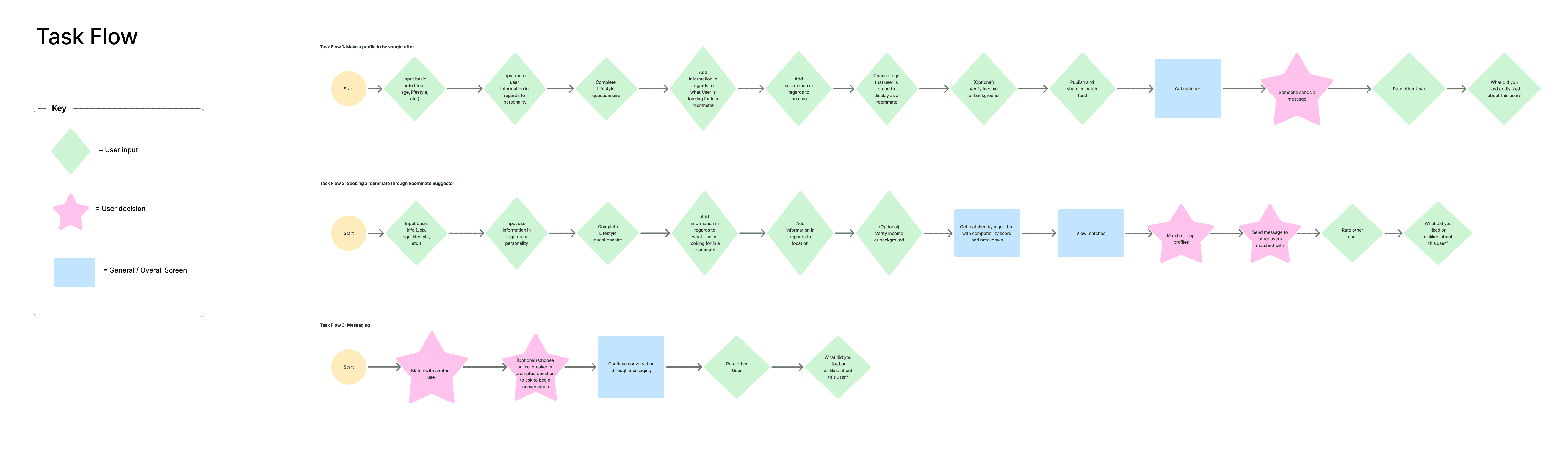
Task Flow matching
I mapped out 3 core task flows:
Onboarding & Profile Setup
Users can provide specific lifestyle details such as pet ownership, guest frequency, and cleanliness expectations when building their profile to make conversations with prospective roommates efficient. This would lead to data-rich profiles that can serve as a foundation for the matching algorithm.
Discovering & Filtering Matches
Compatibility insights for each profile the user matches with to allow users to quickly assess other users before contacting.
Connection & Verification
Conceptualizing: Low-fidelity to High-fidelity Designs
01 Lifestyle Compatibility
While auditing the Roomster app, I realized the native user profile design only contained users’ name, sex, city, and budget. While these data points were the necessary basics, it failed to provide a comprehensive view of the users. This information gap led me to brainstorm and consider other ways to find out more information about a user profile.
The Solution
The lifestyle compatibility questionnaire replaces ambiguous profiles with a framework that captures a person’s character to allow their personalities to lead the search rather than just budget alone.
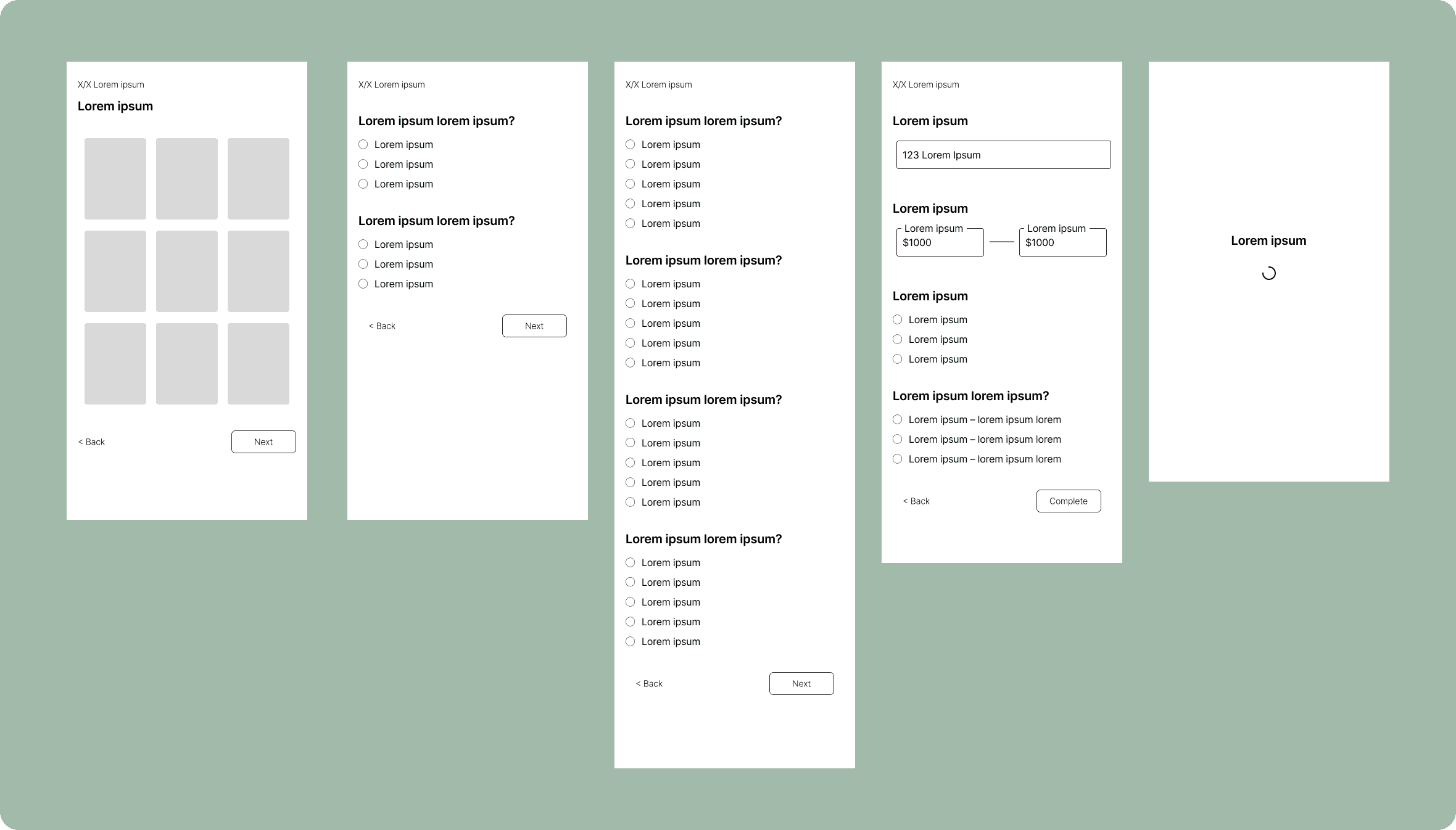
By requiring users to answer specific questions about their preferences and details about themselves, I created a framework that removes that guesswork from the search process. This low-fidelity wireframe focuses on a clean progression flow while gathering essential data points.
Low-Fidelity Wireframes
High-Fidelity Designs
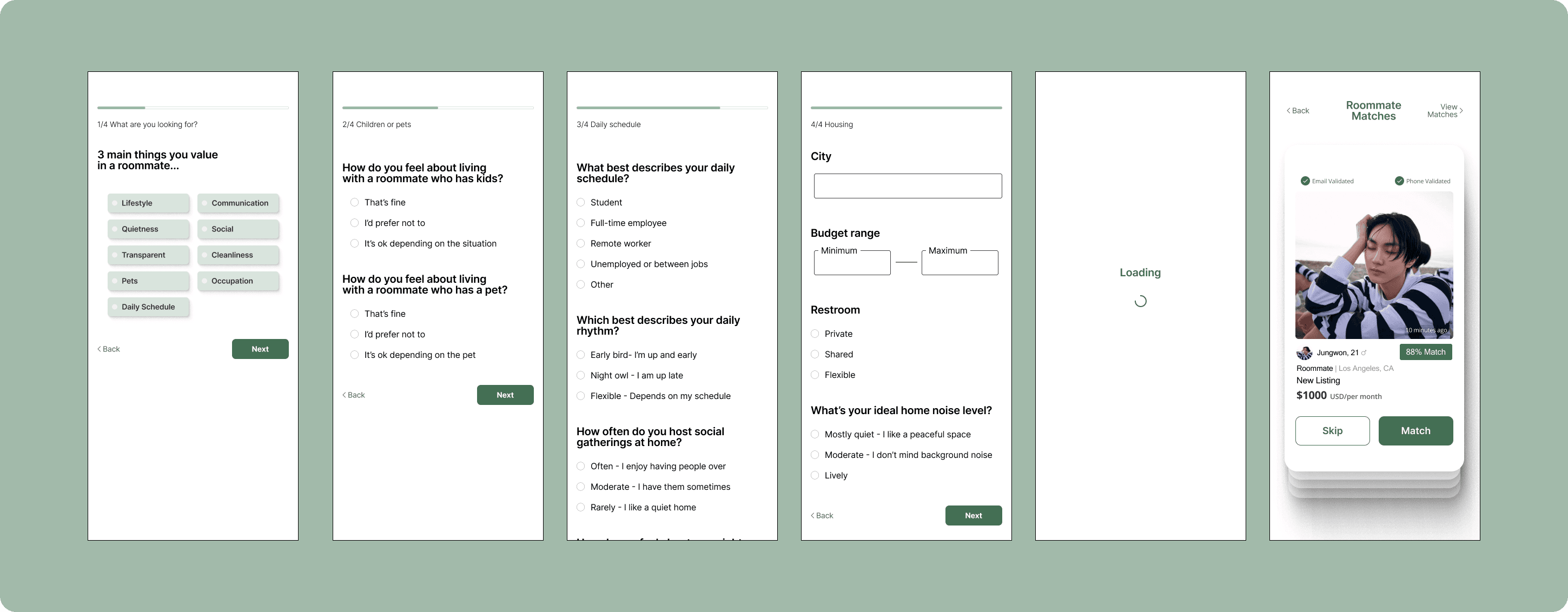
I developed a comprehensive question set designed to surface the specific lifestyle variables such as cleanliness and financial habits that my research identified as critical aspects when looking for a roommate. This curation of intentional questions was specifically aimed to uncover users’ habits as roommates that may not be mentioned in a standard bio in a user profile.
Redesign
User Feedback
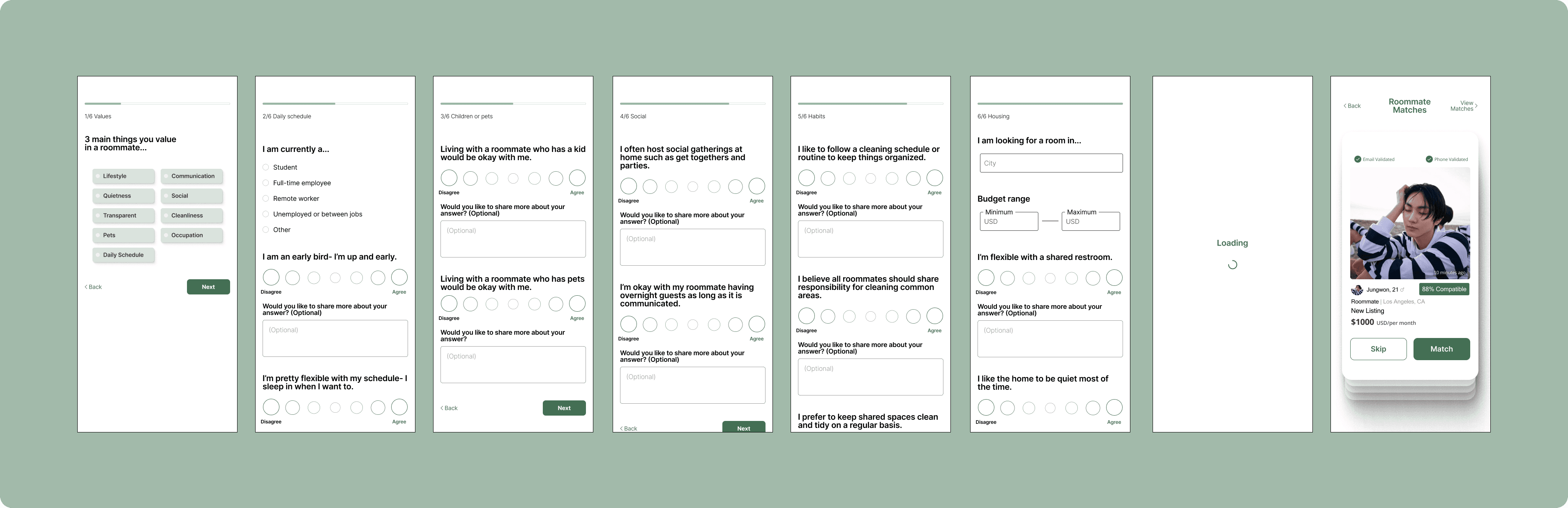
I then conducted a user test of 8 participants. The main feedback was that the multiple choice questions felt too much like a clinical survey. In other words, it felt too rigid as a feature that was meant to be more human centric. It made users feel as though they couldn’t express their personalities through the questionnaire.
Solution
I moved towards using a response system with a spectrum scale. This can better capture personalities and preferences more accurately. This data will allow the matching algorithm to calculate compatibility based on the intensity of a habit or personality instead of binary data. A spectrum scale reflects human nuances as personalities and habits are not always “black and white.”
Final Design
User Test
When users tested this again, 100% of participants voiced that the questionnaire style reduced their frustration as they felt the design was able to portray a range of their personalities and habits. This also gave them more confidence in the algorithm as it made them feel as though they would be matched with the right compatible roommates.
02 Visualizing Compatibility
Prioritizing transparency and trust upon first glance
This design focuses on human-centric matching interface instead of property-centric listings when looking for a roommate. I focused on surfacing specific data points that users can identify as “deal breakers” during the interview phase.
Key Design Features
This design focuses on human-centric matching interface instead of property-centric listings when looking for a roommate. I focused on surfacing specific data points that users can identify as “deal breakers” during the interview phase.
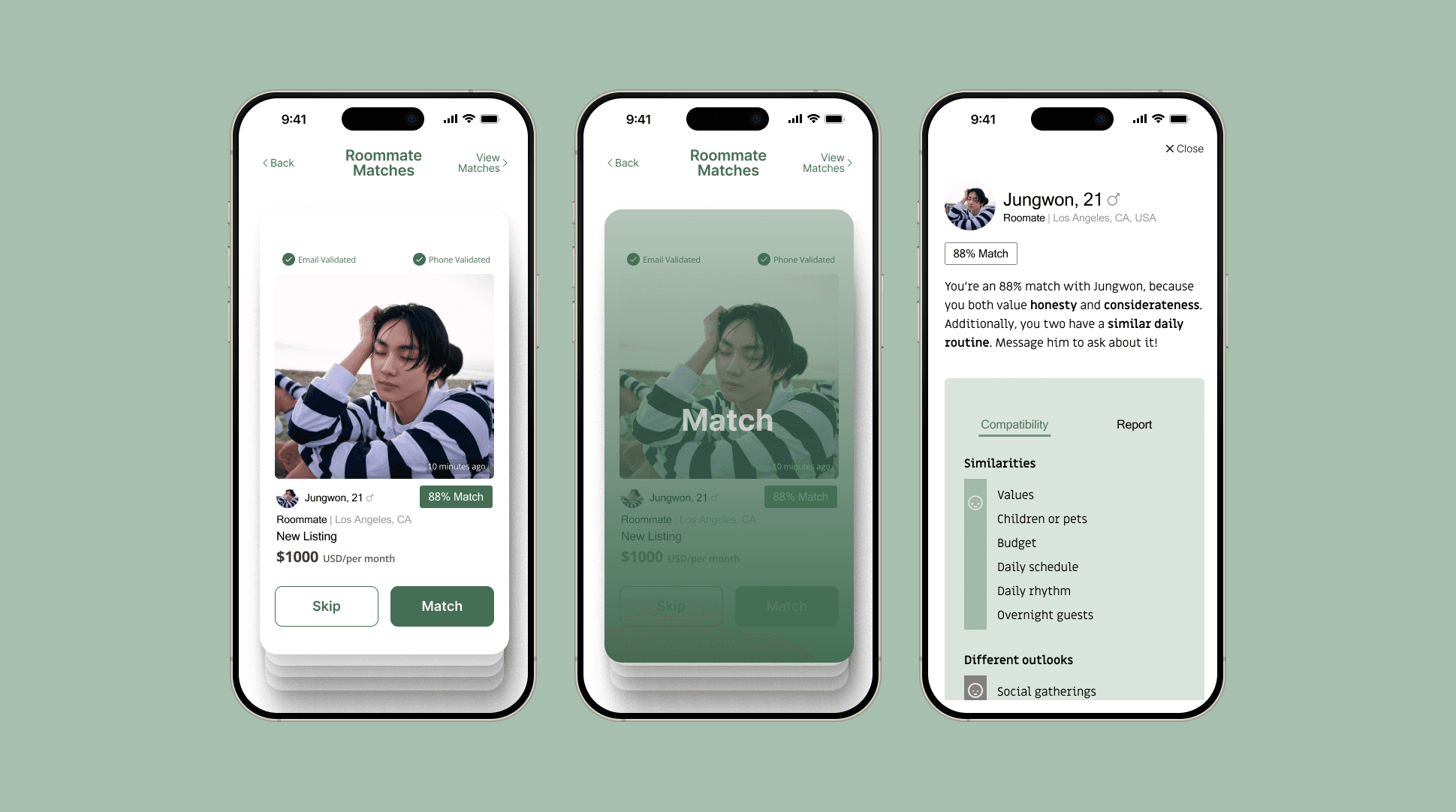
Every profile will show the Match Percentage to the user (e.g., 88% Match) to serve as an indicator for lifestyle alignment based on the algorithm’s analysis.
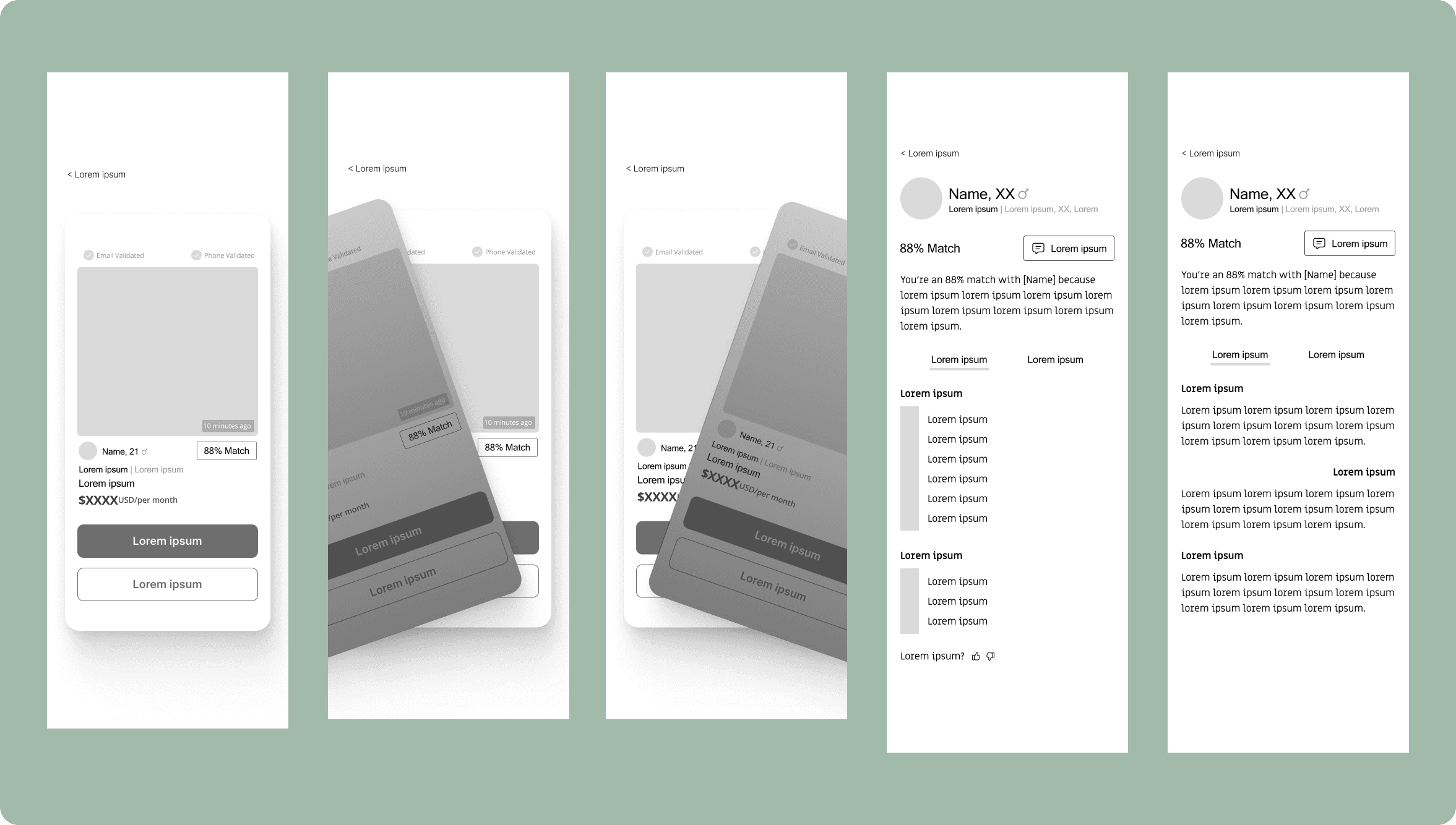
In the low-fidelity designs, I decided to utilize a swipe feature that users can utilize on their compatible roommate matches.
The next challenge was to determine what the user can view when they click on a profile. According to the user interviews, 100% of users felt more comfortable when they’re able to see people’s profiles to have a gauge and sense of their validity and personality.
I added a compatibility badge where users can not only see if another user is compatible but by how much they are compatible and how.
Low-Fidelity Wireframes
High-Fidelity Designs
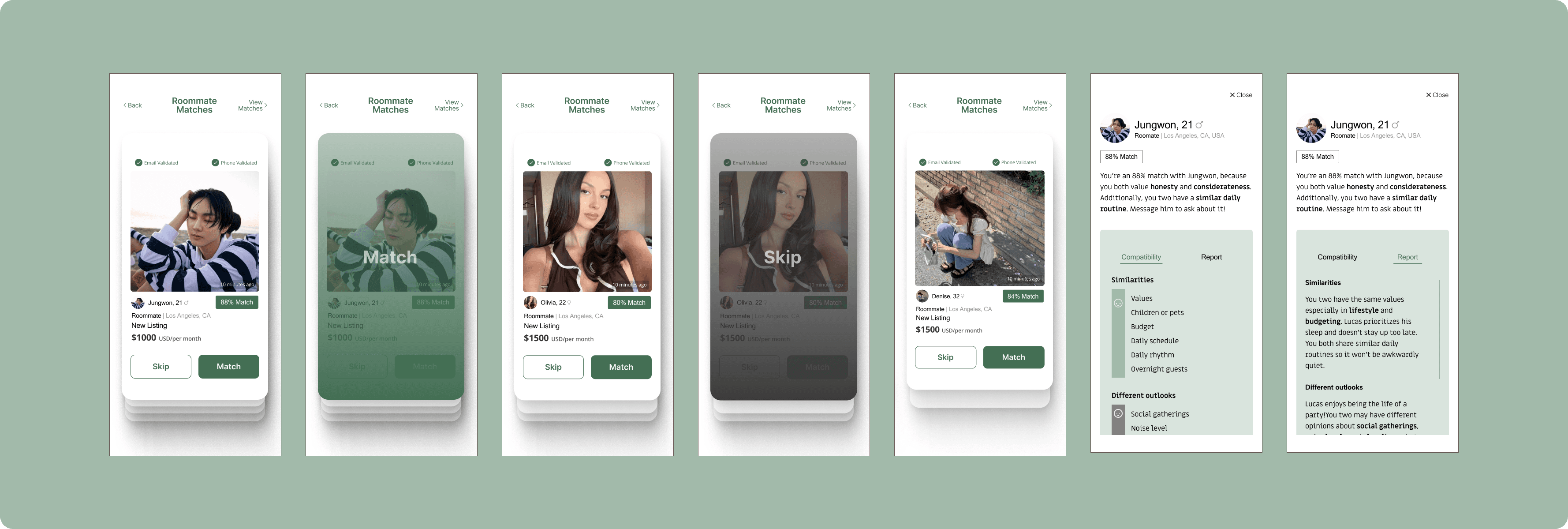
Each profile features a personal bio alongside a compatibility snapshot that breaks down similarities and differences to allow users to immediately gauge. For those who want to dig deeper into the “why” behind the match, a deep dive report tab was provided for users to read about. The purpose of this was to allow transparency between users to encourage better matches.
Redesign
Feedback
100% of participants during the usability test understood the swiping feature as they immediately knew which direction to swipe to match or to skip. They also enjoyed the compatibility screen where they can view information at a glance and had the option to dive deeper into the report.
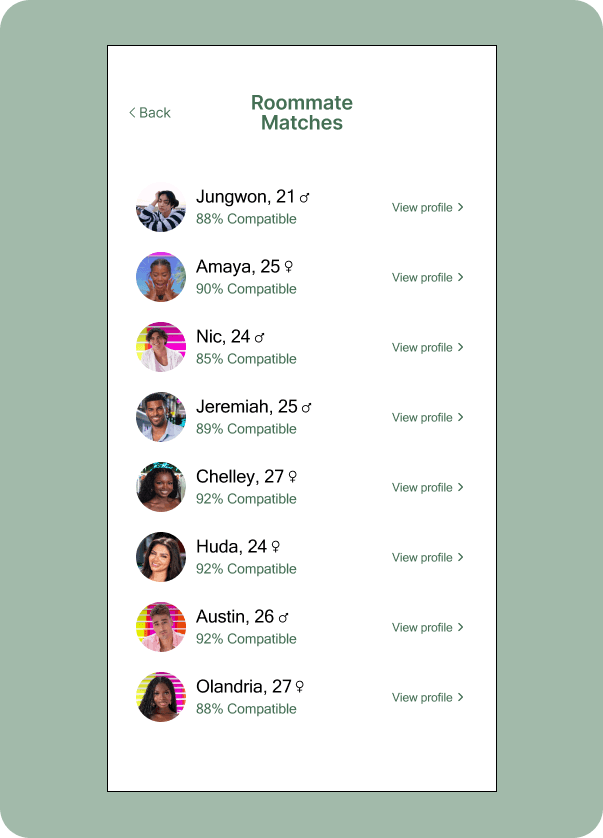
The main feedback was that there was no space to view all of their potential matches at once. Participants requested a screen where they could browse through their match list and tap on any profile while also having the ability to see how compatible they were with everyone at a glance.
Solution
I added a screen where users would view all of their matches simultaneously while including the compatibility percentage.
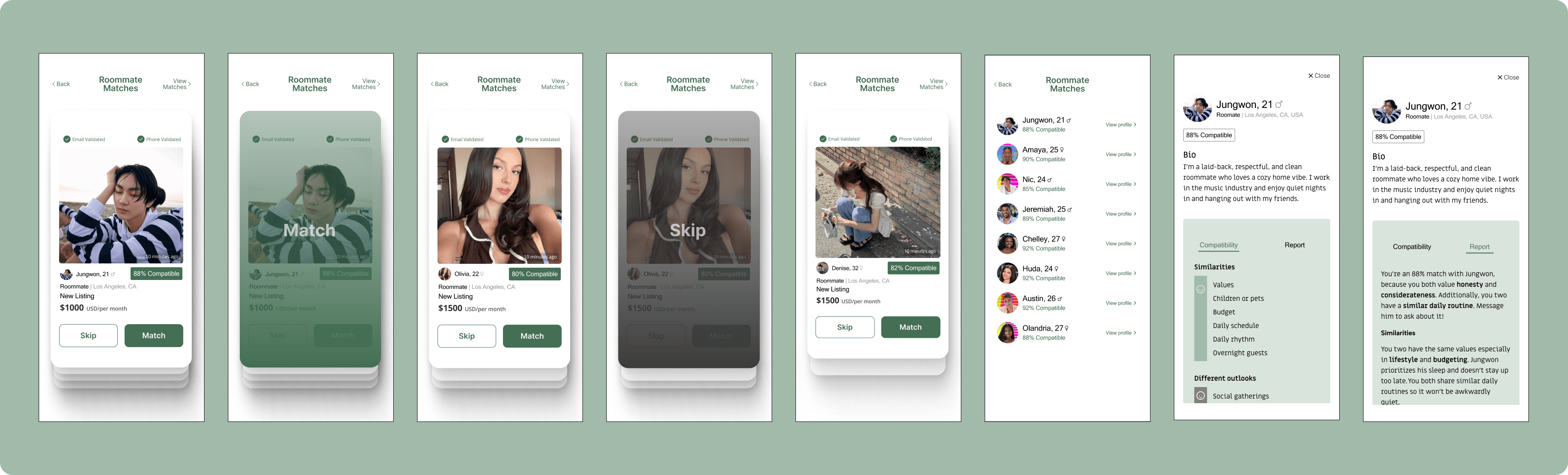
The Final Design
Reflection
User Preferences and Inclusivity vs. Ethical Design
Looking back on this project, the most challenging part was balancing user fears with ethical design. In the user interview, 100% of participants reported that financial responsibility was their top priority as their biggest fear was living with a roommate who did not pay rent on time. Because of that, I felt it was essential to include questions about finances in the questionnaire.
However, I recognize that money is deeply personal and not everyone is comfortable being transparent about their financial situation. Including questions regarding finances could be controversial and might even feel invasive to some users. Building an algorithm around financial matching could lead to some level of discrimination or exclude certain groups like who might come from non-traditional incomes such as freelancers, students, etc.
If I had more time, I’d want to spend it to refine the questions in this app. While the spectrum scale was a huge step, I feel like I’ve only scratched the surface of what makes a roommate pairing actually work. I’d want to investigate beyond the standard lifestyle questions and perform more A/B Tests on questions and wording.
This project showed me that I was not just designing a mobile app, but I was trying to design a space where people could feel safe and trust one another.
Citation
Jeffers, K., Esteve, A., & Batyra, E. (2024). Non-family living arrangements among young adults in the United States. European Journal of Population, 40(1). https://doi.org/10.1007/s10680-024-09696-5